

Search engine optimization controls how digital content performs in organic search results. Search engines parse billions of web documents using complex retrieval algorithms. Content marketers target these processing algorithms to build topical authority and capture targeted web traffic. High topical authority demands grouping related documents into strict, interconnected topic clusters.
Google evaluates websites by measuring factual relevance and technical stability. Traditional marketing relied on exact-match keywords placed in meta tags. Modern optimization strategies define the exact relationships between nouns, verbs, and real-world objects. A website deploying structured data declares these semantic relationships explicitly to the search crawler.
Commercial-intent pages convert 3 to 5 times better than informational pages, per HubSpot’s 2024 benchmark. This high conversion rate depends entirely on clear site architecture. A web page with high entity density answers a broader range of user queries than a keyword-stuffed document. Search algorithms reward this original information gain with higher organic visibility.
Understanding why SEO is important provides the foundation for driving consistent organic growth.
What is the exact definition of search engine optimization?

Search engine optimization is the practice of aligning digital content with search engine algorithms to increase organic traffic. The process involves technical adjustments, content creation, and authority building to secure high placement on search engine results pages.
Google reads interconnected web pages using natural language processing models. The algorithmic processor extracts named entities directly from the HTML document. A content writer structures the text to present factual claims clearly to this processor. The search crawler maps these factual claims against the central topic. You must understand exactly how search engines work to align your content with this extraction process.
Search optimization requires comprehensive subject coverage. A domain publishes distinct articles on one core concept. The publisher connects these articles using descriptive internal links. The Googlebot crawler follows these internal links to calculate the topical depth of the domain. Websites demonstrating extensive topical depth rank higher in the organic search results.
Why is search engine optimization important for website growth?
Search engine optimization is important because organic search delivers the highest volume of high-intent digital traffic. A well-optimized website captures users actively seeking specific products or answers. This targeted visibility reduces customer acquisition costs and builds long-term brand authority.
Over 68 percent of online experiences begin with a search engine query, per BrightEdge’s 2024 traffic report. Users trust the organic search results above paid advertisements. A business securing the top organic position captures a massive share of this daily search volume. The consistent traffic flow insulates the business against rising paid advertising costs.
Search algorithms rely on context to resolve ambiguous search queries. The search engine analyzes the surrounding on-page entities to determine the correct intent. Contextual clarity reduces the processing load on the algorithmic retrieval system.
The three growth advantages of search engine optimization are listed below.
- Cost Efficiency: Organic traffic requires zero per-click fees from the advertising budget.
- Brand Trust: Users perceive top-ranking domains as credible industry authorities.
- Traffic Stability: A strong organic footprint delivers consistent visitors during volatile market cycles.
What are the primary goals of an SEO strategy?
The primary goals of an SEO strategy include establishing topical authority and matching user search intent. The strategy answers complex queries through comprehensive content clusters. Search engines reward this structural depth with increased organic traffic and higher lead conversion rates.
Digital marketers build semantic architecture to dominate specific knowledge verticals. The domain publishes exhaustive guides covering every related subtopic. The search algorithm recognizes this exhaustive coverage as a signal of high expertise. You use this expertise to grow your business online by attracting qualified buyers. The Googlebot indexes these expert pages rapidly.
A technical strategy targets indexing efficiency through clear entity structures. The crawler allocates crawl budget based on how easily it parses page relationships. Clear entity relationships guide the crawler through the site architecture efficiently.
The four operational goals of search engine optimization are listed below.
- Authority Building: A dense topic cluster signals deep domain expertise to the search algorithm.
- Intent Matching: Optimized pages align exactly with the informational or commercial needs of the user.
- Query Expansion: One semantically dense document ranks for hundreds of long-tail keyword variants.
- Index Speed: Clean internal linking structures help the crawler discover new URLs instantly.
How do search engine algorithms evaluate and rank pages?
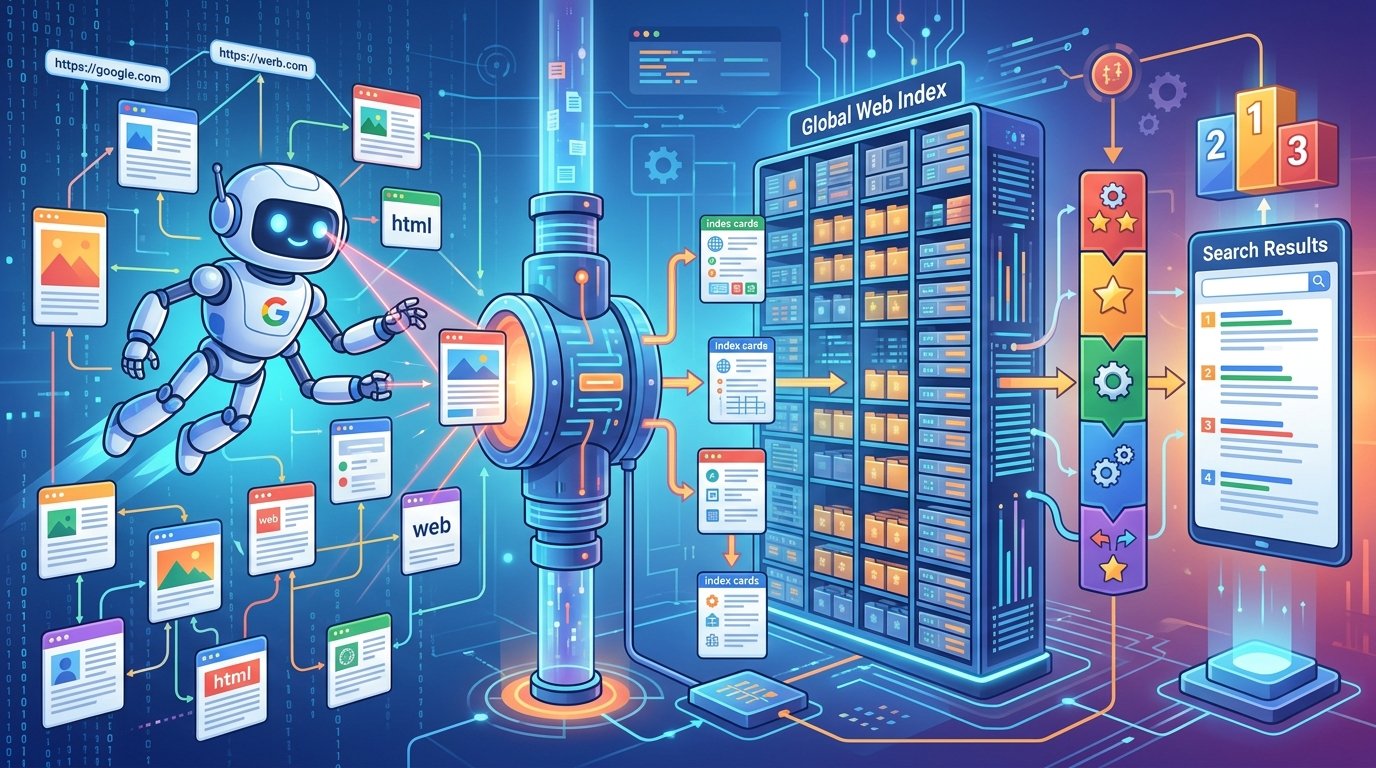
Search engine algorithms evaluate and rank pages using crawling, indexing, and retrieval mechanisms. The system scores documents based on relevance, factual density, and user experience signals. The highest-scoring page earns the top position for a specific user query.
Google builds a mathematical understanding of the web using vast entity databases. The system identifies the primary entity within the user query. The algorithm scans the index for web documents featuring that exact primary entity. The retrieval process prioritizes documents offering related entity attributes. This semantic matching process delivers precise answers to complex user questions.
Search engines evaluate the co-occurrence of terms on a specific page. A document discussing “interest rates” must also mention “inflation” and “central banks” to prove relevance.
The four algorithmic stages of search engine evaluation are listed below.
- Crawling: The Googlebot software follows hyperlinks to discover new web documents.
- Rendering: The system executes JavaScript code to view the final page layout.
- Indexing: The parser extracts the text and stores the data in the central database.
- Ranking: The retrieval algorithm orders the indexed pages based on query relevance.
What is the difference between on-page and off-page SEO?
On-page SEO controls the content, structure, and HTML code within the website domain. Off-page SEO measures external signals like backlinks and brand mentions from third-party websites. Both disciplines combine to prove site relevance and domain authority to the search engine.
On-page optimization requires strict attention to factual density and heading architecture. The webmaster updates the title tags, meta descriptions, and image alt text. Off-page optimization requires active outreach to secure hyperlinks from trusted industry publications. The search engine treats these external hyperlinks as votes of confidence.
An effective campaign balances both approaches simultaneously. A site with excellent content fails to rank without external authority signals. A site with massive authority fails to convert traffic without clear on-page answers.
| Dimension | On-Page SEO | Off-Page SEO |
|---|---|---|
| Locus of Control | Internal website files | External third-party domains |
| Primary Metric | Content relevance | Backlink authority |
| Key Tactics | Keyword placement, internal links | Digital PR, guest posting |
| Algorithm Signal | Answers the specific query | Proves the domain is trusted |
How does technical SEO impact crawl budget and indexing?
Technical SEO impacts crawl budget by removing structural barriers that block search engine bots. A fast, error-free website allows the Googlebot to crawl more pages per visit. Efficient crawling guarantees the search engine indexes new content immediately.
Googlebot allocates crawl budget by a host’s response time and content change rate. A slow server forces the bot to abandon the crawl prematurely. The webmaster optimizes server response times to keep the bot engaged. The technical team deploys an XML sitemap to provide a direct map of all priority URLs. The sitemap prevents the bot from wasting time on low-value pagination links.
Technical optimization requires strict management of the robots.txt file. The file instructs the crawler which directories to ignore. The webmaster uses canonical tags to consolidate duplicate content signals. The algorithm reads the canonical tag and indexes only the primary version of the page.
What role does keyword research play in modern optimization?
Keyword research identifies the exact vocabulary and search volume associated with a specific user intent. The data dictates the topical clusters the website must build. Modern research focuses on mapping entire query networks rather than isolating single terms.
Marketers perform keyword research to extract search demand data from the market. The strategist groups hundreds of related keywords into a single topic cluster. You build the pillars of SEO strategy using this quantitative search data. This query fanning process ensures the pillar page answers every variation of the user intent.
Search volume data prioritizes the content production schedule. The marketing team drafts articles for high-volume informational queries first. The natural language processor scans the final document for these specific intent signals. The presence of the correct entities confirms the page matches the user query.
How do content clusters establish topical authority?
Content clusters establish topical authority by demonstrating exhaustive coverage of a specific subject. A central pillar page links to dozens of related subtopic pages. This dense internal linking structure signals deep expertise to the search engine algorithm.
Google evaluates domain authority at the topic level rather than the site level. A website publishing fifty articles on commercial roofing establishes strong topical authority in that specific niche. The algorithm calculates the semantic distance between the published articles. Closely related articles reinforce the expertise signal sent to the crawler. The search engine ranks the entire cluster higher based on this combined semantic weight.
The internal hyperlink network transfers ranking power between the documents. A high-traffic pillar page passes authority down to the specific subtopic nodes. A well-performing subtopic page passes relevance back up to the main pillar. The search engine crawler uses these links to index the entire cluster rapidly.
What is the difference between SEO, SEM, and PPC?

SEO targets organic, unpaid search engine rankings. SEM encompasses both organic optimization and paid search advertising. PPC refers exclusively to the pay-per-click advertising model where advertisers pay a fee each time a user clicks their ad.
Organic optimization requires months of sustained content production to yield traffic results. Paid advertising delivers immediate visibility at the top of the search results page. The marketing budget dictates which channel a company prioritizes. You balance SEO vs SEM to capture both immediate leads and long-term brand equity.
The search engine clearly separates the paid advertisements from the organic blue links. Users skip the paid ads to click the trusted organic results.
| Dimension | SEO | PPC | SEM |
|---|---|---|---|
| Traffic Cost | Free per click | Paid per click | Mixed |
| Placement Time | 3 to 6 months | Immediate | Mixed |
| Asset Value | Builds permanent equity | Stops when budget ends | Holistic |
| Best Use Case | Long-term authority | Short-term product launches | Complete search dominance |
My SEO pricing page lists real numbers for each scope.
How much does professional search engine optimization cost?
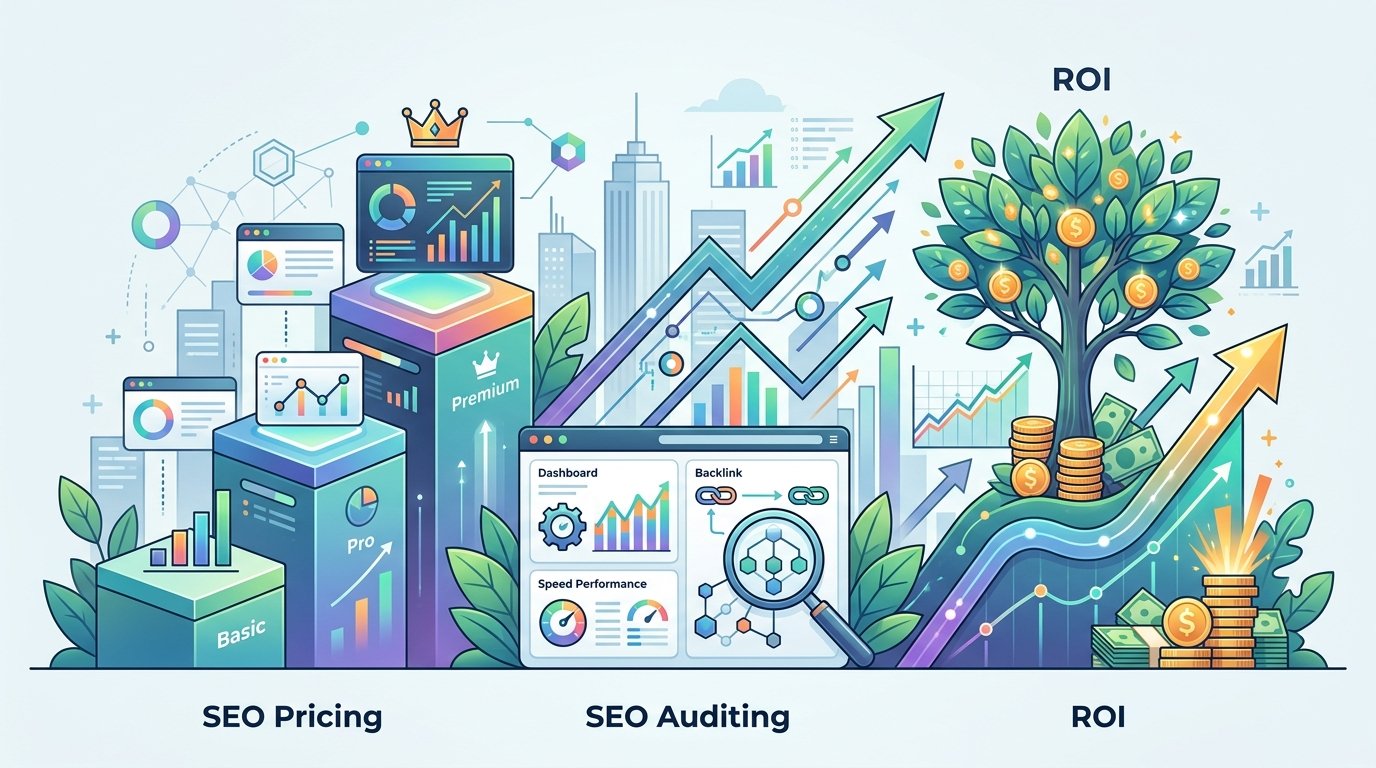
Professional search engine optimization costs between 1,500 and 5,000 dollars per month for a standard retainer. Enterprise-level technical audits exceed 10,000 dollars. Agency pricing depends entirely on the domain size and the query network complexity.
Digital marketing agencies price optimization campaigns based on hourly consulting rates. The US Bureau of Labor Statistics reported a median wage of 34.75 dollars per hour in May 2024 for market research analysts. Specialized technical consultants charge significantly higher rates for advanced structured data work. You hire an expert SEO consultant to map the entity gaps across your domain. The consultant analyzes the existing topic clusters and the technical implementation.
A comprehensive retainer requires specialized software tools and content production budgets. The strategist exports the organic query data from Google Search Console. The writing team drafts the missing entities against the top-ranking competitors.
| Audit Tier | Monthly Cost Range | Included Deliverables |
|---|---|---|
| Small Business | $1,000 – $2,500 | Local citations, basic blog content, technical review |
| Mid-Market | $3,000 – $6,000 | Topic cluster mapping, NLP optimization, link building |
| Enterprise | $8,000 – $15,000+ | Full knowledge graph alignment, custom JSON-LD |
What are the biggest mistakes in search engine optimization?
The biggest mistakes in search engine optimization include publishing thin content, omitting structured data, and ignoring search intent. Orphaned pages fail to transfer topical authority. These structural errors prevent the search engine from mapping the domain entities correctly.
Content writers often focus on word counts instead of factual density. The resulting text contains excessive filler words and zero original information gain. The natural language processor extracts no meaningful entities from the bloated paragraphs. The algorithm ignores the page entirely due to low entity density. The marketing team wastes the production budget on invisible content.
Technical implementation errors destroy the semantic architecture. A developer implements invalid JSON-LD schema code. The Googlebot parser fails to read the corrupted markup.
| Failure Mode | Root Cause | Organic Cost |
|---|---|---|
| Orphaned Pages | Missing internal links | Zero crawler discovery |
| Intent Mismatch | Wrong page format | High bounce rate |
| Invalid Schema | Syntax errors in JSON-LD | Loss of rich snippets |
| Thin Content | Low entity density | Algorithmic suppression |
The three most expensive optimization errors are listed below.
- Cannibalization: Two identical pages compete for the exact same semantic cluster.
- Isolation: A valuable article receives zero internal links from the main pillar page.
- Vagueness: The writer uses ambiguous pronouns instead of repeating the specific entity name.
What are the measurable benefits of a successful SEO campaign?
The measurable benefits of a successful SEO campaign include capturing long-tail search queries and securing featured snippets. The strategy increases overall organic visibility across the entire topic cluster. Websites demonstrating deep entity coverage earn higher trust scores from search algorithms.
Semantic optimization future-proofs the domain against constant algorithmic updates. Google constantly refines its natural language processing capabilities. A website structured around clear entities benefits from these continuous system upgrades. You secure professional SEO services to build this resilient technical architecture. The resilient architecture maintains traffic stability during volatile algorithm changes.
Featured snippet ownership captures 8.6 percent of clicks, per Ahrefs’ study of 2 million queries. This increased click-through rate signals high content quality to the search engine.
The four measurable benefits of organic optimization are listed below.
- Snippet Ownership: Structured data increases the probability of capturing the zero-click answer box.
- Query Expansion: A single optimized page ranks for thousands of semantically related keyword variations.
- Traffic Quality: Exact intent matching delivers highly qualified visitors to the commercial landing pages.
- Crawl Efficiency: Logical site structures allow the Googlebot to index the domain with minimal server load.
What are the operational challenges of maintaining SEO rankings?
The operational challenges of maintaining SEO rankings include high content creation costs and complex technical implementation. Mapping an exhaustive topic cluster requires extensive research hours. Developers must write and validate precise JSON-LD schema code to declare page entities.
Producing semantically dense content requires subject matter expertise. A generic copywriter cannot generate the specific entities and domain vocabulary required to satisfy the algorithm. The marketing team must hire expensive industry experts to draft the pillar pages. The financial investment required to build a massive topic cluster presents a barrier for smaller organizations.
Maintaining the semantic architecture requires constant technical auditing. The marketing team must update the internal links every time a new article goes live. The search landscape shifts as competitors publish new entity-rich content.
The three operational challenges of organic optimization are listed below.
- Resource Intensity: Writing a 4,000-word authoritative pillar page demands significant research and editorial time.
- Technical Debt: Broken internal links degrade the topical authority signal across the entire cluster.
- Measurement Difficulty: Tracking rankings for thousands of long-tail semantic variants overwhelms standard reporting tools.
How will generative AI impact search engine optimization this year?
Generative AI will impact search engine optimization by increasing the frequency of AI Overviews in search results. Large language models retrieve facts directly from semantically structured web pages. Websites failing to declare their entities clearly will lose organic visibility entirely.
AI Overviews appear for 47 percent of searches, according to AboveA’s 2026 search industry report. This massive shift forces digital marketers to optimize directly for machine retrieval systems. The generative AI model requires explicit subject-predicate-object sentence structures. The language model extracts these clear facts to generate the summary response. A paragraph buried in complex clauses fails this extraction process.
AI search engines rely heavily on established topical authority. The language model prioritizes facts from domains with a verified history in the Knowledge Graph. The semantic strategy feeds this exact requirement. Domains mapping their entities with valid Schema.org markup provide the structured data the AI models consume.
How do digital marketing teams execute SEO campaigns?
Digital marketing teams execute SEO campaigns by mapping topic clusters and injecting structured data. The content strategists audit the existing pages for missing entities. The technical team applies JSON-LD markup to explicitly define the site’s architecture.
Execution requires strict coordination between writers and developers. The SEO analyst uses natural language processing software to identify the entity gaps in the current content. The writer updates the paragraphs to include the missing nouns and verbs. The developer validates the schema code using Google’s Rich Results Test tool. The team continuously monitors the server logs to confirm Googlebot crawls the new internal links.
Does search engine optimization require schema markup?
Yes, search engine optimization requires schema markup. Schema.org vocabulary provides the standardized code that search engines use to understand page content. Developers deploy JSON-LD scripts to explicitly declare organizations, authors, and products. This structured data disambiguates the entities for the Knowledge Graph. Without markup, the search engine must guess the context.
Is link building still relevant for SEO?
Yes, link building remains highly relevant for SEO. External backlinks from authoritative domains signal trust to the search engine algorithm. The algorithm treats these external links as independent votes of confidence. A domain with zero external backlinks struggles to rank for competitive commercial queries.
Can small businesses compete in search engine optimization?
Yes, small businesses compete in search engine optimization. A small domain can establish extreme topical authority within a very narrow niche. The search algorithm often ranks a highly specific niche site above a broad domain authority site. Small companies dominate local search by maintaining hyper-focused content clusters.
Will AI answer engines replace traditional SEO?
No, AI answer engines will not replace traditional SEO. These generative models consume semantically structured data to formulate their answers. Websites utilizing clear entity definitions and topic clusters secure the citations in these AI-generated responses. You optimize for AI by providing clear, extractable facts.
What tools analyze SEO performance?
Several software tools analyze SEO performance. Google Search Console provides first-party data regarding impressions and organic clicks. Platforms like Clearscope and SurferSEO compare the entity density of a draft against the top-ranking competitors. Semrush provides the query data required to build the initial topic clusters.
Do SEO strategies increase overall online presence?
Yes, SEO strategies increase overall online presence. The strategy expands a website’s footprint across thousands of long-tail search queries. A single entity-rich pillar page captures traffic from hundreds of related semantic searches. The company secures widespread visibility by answering the entire spectrum of user intent within the market.
Can an SEO content writer guarantee first-page rankings?
No, an SEO content writer cannot guarantee first-page rankings. Google explicitly warns against agencies guaranteeing specific ranking positions. The writer controls the factual density and entity inclusion of the draft. The search engine algorithm independently determines the final ranking based on hundreds of external variables.
Should local businesses invest in local SEO?
Yes, local businesses should heavily invest in local SEO. Local search relies entirely on regional entity mapping and proximity signals. The business must deploy LocalBusiness schema to declare its exact coordinates and service areas to Google. Applying local SEO for small business connects the company entity directly to the geographic entity.

