
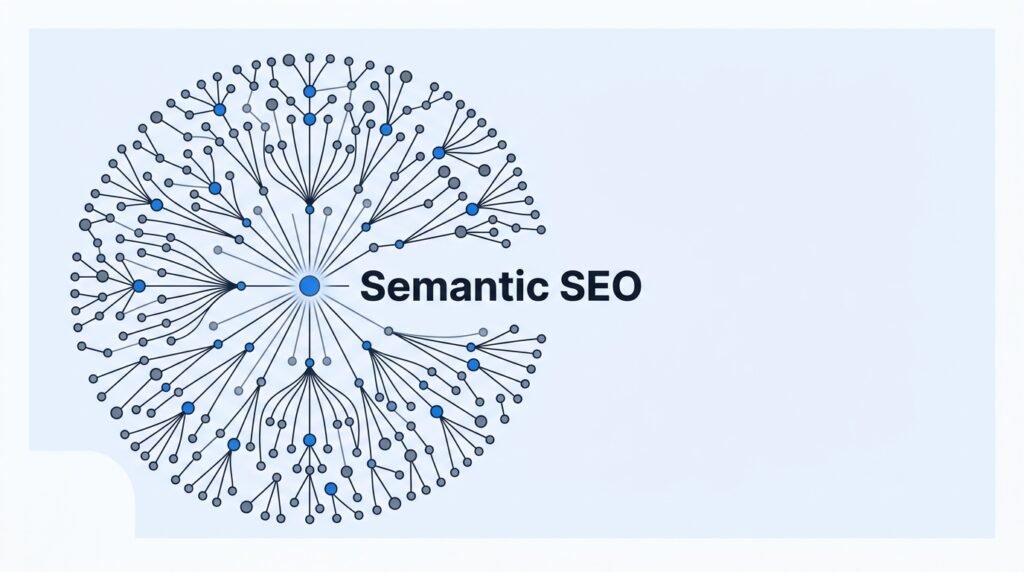
Semantic SEO structures digital text around defined entities and broad concepts to match modern search engine retrieval logic. Search engines parse this unstructured text using natural language processing. Content marketers target these processing algorithms to build topical authority. Topical authority requires grouping related documents into strict, interconnected topic clusters.
The Google Hummingbird algorithm shifted search evaluation from lexical string matching to meaning extraction. Traditional optimization relied on exact-match keywords placed in meta tags. Semantic strategies define the exact relationships between nouns, verbs, and real-world objects. A website deploying structured data declares these relationships explicitly to the crawler.
AboveA’s 2026 search industry report found position-one URLs earn citations in AI Overviews 43 percent of the time. This extraction rate depends entirely on clear semantic architecture. A web page with high entity density answers a broader range of user queries than a keyword-stuffed document. Search algorithms reward this original information gain with higher organic visibility.
What is the exact definition of semantic SEO?
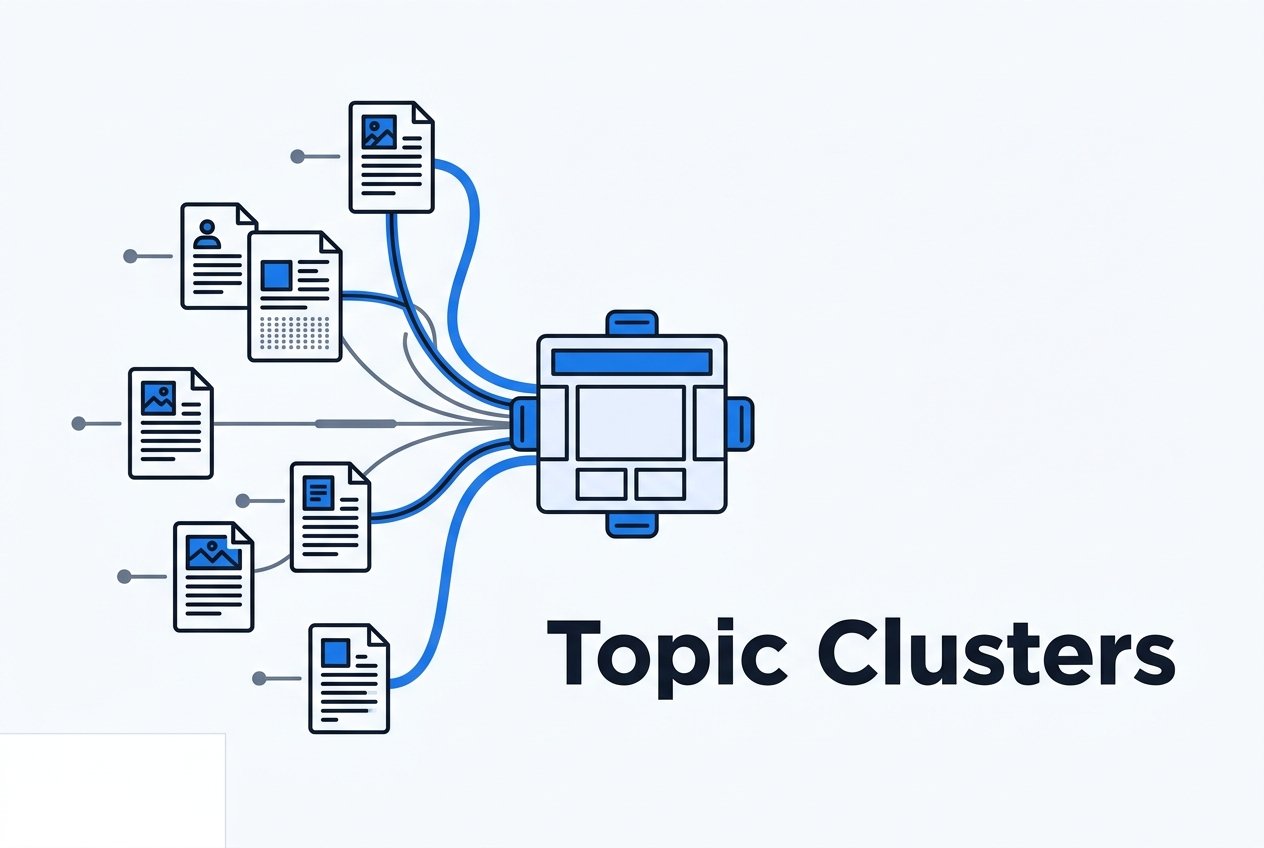
Semantic SEO is a digital marketing strategy that optimizes web content for meaning, entities, and context rather than single keywords. This optimization process builds deep topical authority by answering clusters of related user queries across interconnected pages.
Google reads these interconnected pages using natural language processing models. The processor extracts named entities directly from the HTML document. A content writer structures the sentences to present factual claims clearly to the processor. The search crawler maps these factual claims against the central topic.
Semantic optimization requires comprehensive subject coverage. A domain publishes fifty distinct articles on one core concept. The publisher connects these articles using descriptive internal links. The Googlebot crawler follows these internal links to calculate the topical depth of the domain. Websites demonstrating extensive topical depth rank higher in the organic search results.
Why is semantic SEO important for Google search?
Semantic SEO is important because Google evaluates content meaning using natural language processing. The Hummingbird algorithm replaced lexical string matching with semantic context analysis. Websites providing clear entity relationships secure higher positions in the search index.
Search algorithms rely on context to resolve ambiguous search queries. A user searching for “apple” requires either fruit agriculture data or technology company data. The search engine analyzes the surrounding on-page entities to determine the correct intent. You must deploy the core pillars of SEO strategy to establish this specific context. Contextual clarity reduces the processing load on the algorithmic retrieval system.
AboveA’s 2026 data confirms position-one URLs earn citations 43 percent of the time in AI Overviews. This high citation frequency demands structured, unambiguous information.
The three retrieval advantages of semantic SEO are listed below.
- Disambiguation: Schema.org markup separates identical entity names for the natural language parser.
- Coverage: Topic clusters answer secondary user questions within the primary pillar document.
- Extraction: Short sentences allow the algorithm to isolate specific factual claims instantly.
What are the primary goals of semantic SEO?
The primary goals of semantic SEO include establishing topical authority and matching user search intent. The strategy answers complex queries through comprehensive content clusters. Search engines reward this structural depth with increased organic traffic.
Digital marketers build semantic architecture to dominate specific knowledge verticals. The domain publishes exhaustive guides covering every related subtopic. The search algorithm recognizes this exhaustive coverage as a signal of high expertise. The Googlebot indexes these expert pages rapidly. Rapid indexation accelerates total organic traffic growth.
A semantic strategy targets indexing efficiency through clear entity structures. The crawler allocates crawl budget based on how easily it parses page relationships. Clear entity relationships guide the crawler through the site architecture efficiently.
The four operational goals of semantic SEO are listed below.
- Authority Building: A dense topic cluster signals deep domain expertise to the search algorithm.
- Intent Matching: Optimized pages align exactly with the informational or commercial needs of the user.
- Query Expansion: One semantically dense document ranks for hundreds of long-tail keyword variants.
- Index Speed: Clean internal linking structures help the crawler discover new URLs instantly.
What are the core principles of semantic search?
The core principles of semantic search rely on entity recognition, context analysis, and relationship mapping. Search engines evaluate the meaning behind a query instead of matching exact text strings. The algorithm connects user intent to structured data.
Google builds a semantic understanding of the web using vast entity databases. The system identifies the primary entity within the user query. The algorithm scans the index for web documents featuring that exact primary entity. The retrieval process prioritizes documents offering related entity attributes. This semantic matching process delivers precise answers to complex user questions.
Search engines evaluate the co-occurrence of terms on a specific page. A document discussing “interest rates” must also mention “inflation” and “central banks” to prove relevance.
The three foundational mechanisms of semantic search are listed below.
- Entity Extraction: The parser identifies specific nouns, locations, and organizations in the web text.
- Contextual Weighting: The algorithm measures the physical distance between related terms in a paragraph.
- Intent Resolution: The retrieval system classifies the query as informational, navigational, or transactional.
How does natural language processing work in search?
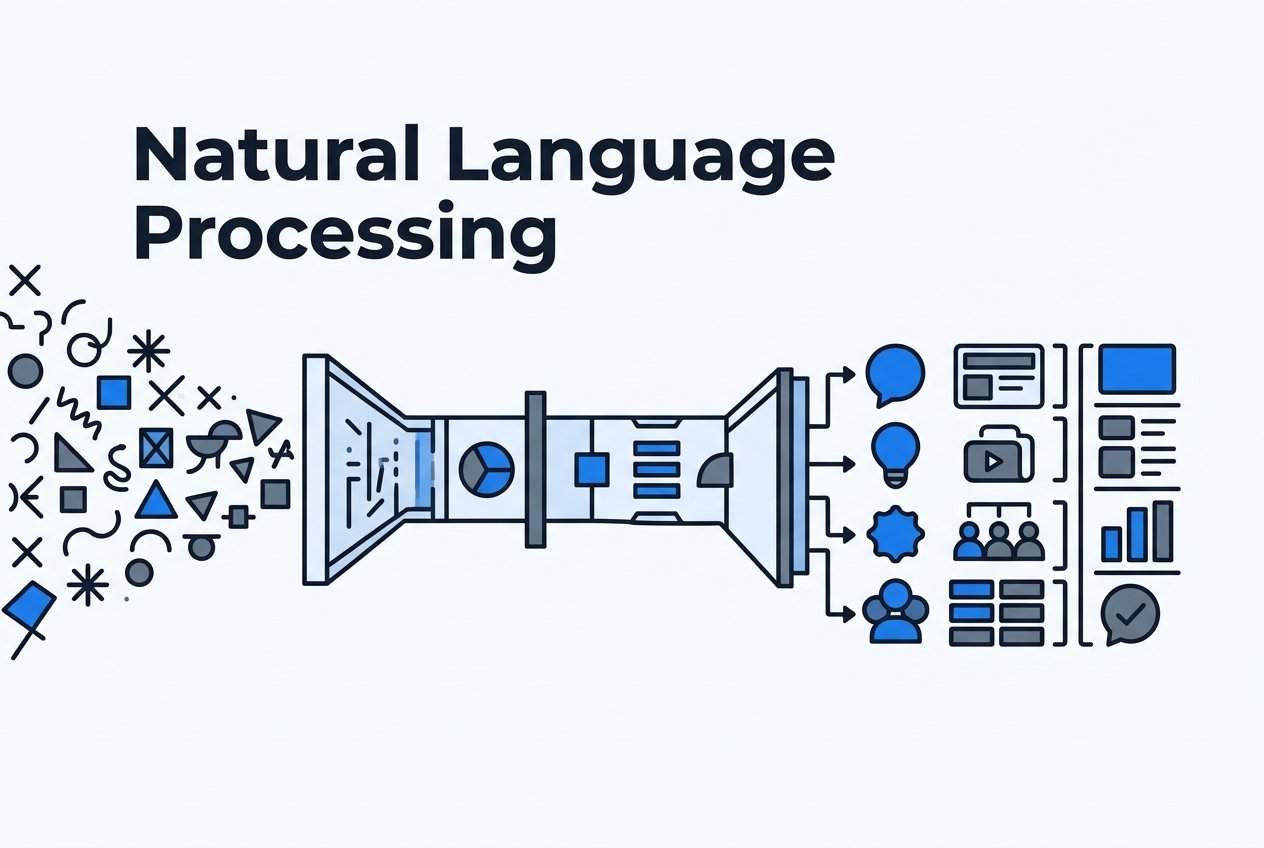
Natural language processing works in search by breaking sentences into discrete tokens. The machine learning model identifies the nouns, verbs, and adjectives. The algorithm maps the relationships between these words to extract the factual meaning.
Google uses natural language processing models to read unstructured web content. The processor parses the HTML text into computational vectors. You optimize for this processor by applying rigorous SEO principles to your sentence structures. The parser isolates the subject, the predicate, and the object. Clear sentences reduce the computational cost of this extraction process.
The natural language parser categorizes text sentiment and factual density. The algorithm scores the document based on the uniqueness of the extracted information.
The four extraction stages of natural language processing are listed below.
- Tokenization: The algorithm splits the paragraph into individual words and punctuation marks.
- Part-of-Speech Tagging: The parser labels every word as a noun, verb, or preposition.
- Dependency Parsing: The system maps the grammatical relationships connecting the labeled words.
- Entity Resolution: The software links the extracted nouns to known objects in the database.
How does the Google Knowledge Graph evaluate entities?

The Google Knowledge Graph evaluates entities by cross-referencing facts across multiple trusted domains. The database links people, places, and concepts using mathematical nodes and edges. Search engines validate this entity data using structured schema markup.
Google relies on the Knowledge Graph to populate rich results and knowledge panels. The database ingests factual data from Wikipedia, government records, and authoritative websites. The algorithm detects inconsistencies between these different data sources. A domain providing consistent, verified facts earns a higher trust score from the evaluation system. This trust score dictates the visibility of the domain in the search engine results pages.
Entity disambiguation remains a critical function of the Knowledge Graph. The system distinguishes between “Jaguar” the animal and “Jaguar” the car manufacturer. The algorithm uses the surrounding on-page context to resolve this ambiguity. A website discussing the car manufacturer must include associated terms like “engine”, “vehicle”, and “price”. The Knowledge Graph maps these associated terms to confirm the correct entity identity.
What are the core components of a semantic SEO strategy?
The core components of a semantic SEO strategy include topic clusters, internal links, and Schema.org markup. Content creators map out broad subjects before writing individual pages. The technical architecture connects these pages into a unified semantic web.
A semantic SEO strategy requires detailed content planning. The marketing team identifies the central entity for the new campaign. The writers produce a comprehensive pillar page covering that broad central entity. The team publishes supporting articles detailing specific subtopics related to the pillar. The developers implement structured data to label these supporting articles for the search crawler.
Internal links transfer topical relevance between the connected pages. The anchor text provides exact context for the target URL. The crawler follows these links to map the complete domain architecture.
The three structural elements of a semantic SEO strategy are listed below.
- Pillar Pages: A 4,000-word document provides an exhaustive overview of the central entity.
- Cluster Content: Supporting articles answer specific, long-tail questions related to the core topic.
- Structured Data: JSON-LD code declares the exact entity attributes to the search engine.
A read on source context in SEO shows how a unique angle earns trust.
How do topic clusters build topical authority?
Topic clusters build topical authority by demonstrating exhaustive coverage of a specific subject. A central pillar page links to dozens of related subtopic pages. This dense internal linking structure signals deep expertise to the search engine algorithm.
Google evaluates domain authority at the topic level rather than the site level. A website publishing fifty articles on commercial roofing establishes strong topical authority in that specific niche. The algorithm calculates the semantic distance between the published articles. Closely related articles reinforce the expertise signal sent to the crawler. The search engine ranks the entire cluster higher based on this combined semantic weight.
The internal hyperlink network transfers ranking power between the documents. A high-traffic pillar page passes authority down to the specific subtopic nodes. A well-performing subtopic page passes relevance back up to the main pillar. The search engine crawler uses these links to index the entire cluster rapidly. This efficient crawling mechanism ensures the algorithm registers the full scope of the domain’s expertise.
What role does search intent play in semantic optimization?
Search intent determines the format, depth, and structure of a semantically optimized page. Search engines classify queries as informational, navigational, or commercial. A page must match this classification exactly to satisfy the retrieval algorithm.
Google uses user behavior metrics to measure intent satisfaction. A user searching for “buy running shoes” expects a transactional ecommerce page. An informational blog post fails to rank for this commercial query. The semantic SEO strategy aligns the page structure with the expected user outcome. The algorithm rewards pages that solve the user’s problem immediately.
Search intent dictates the semantic entities required on the page. A commercial query requires entities like “price”, “shipping”, and “warranty”. An informational query requires entities like “history”, “mechanism”, and “examples”. The natural language processor scans the document for these specific intent signals. The presence of the correct entities confirms the page matches the user query.
How does semantic SEO compare to traditional SEO?
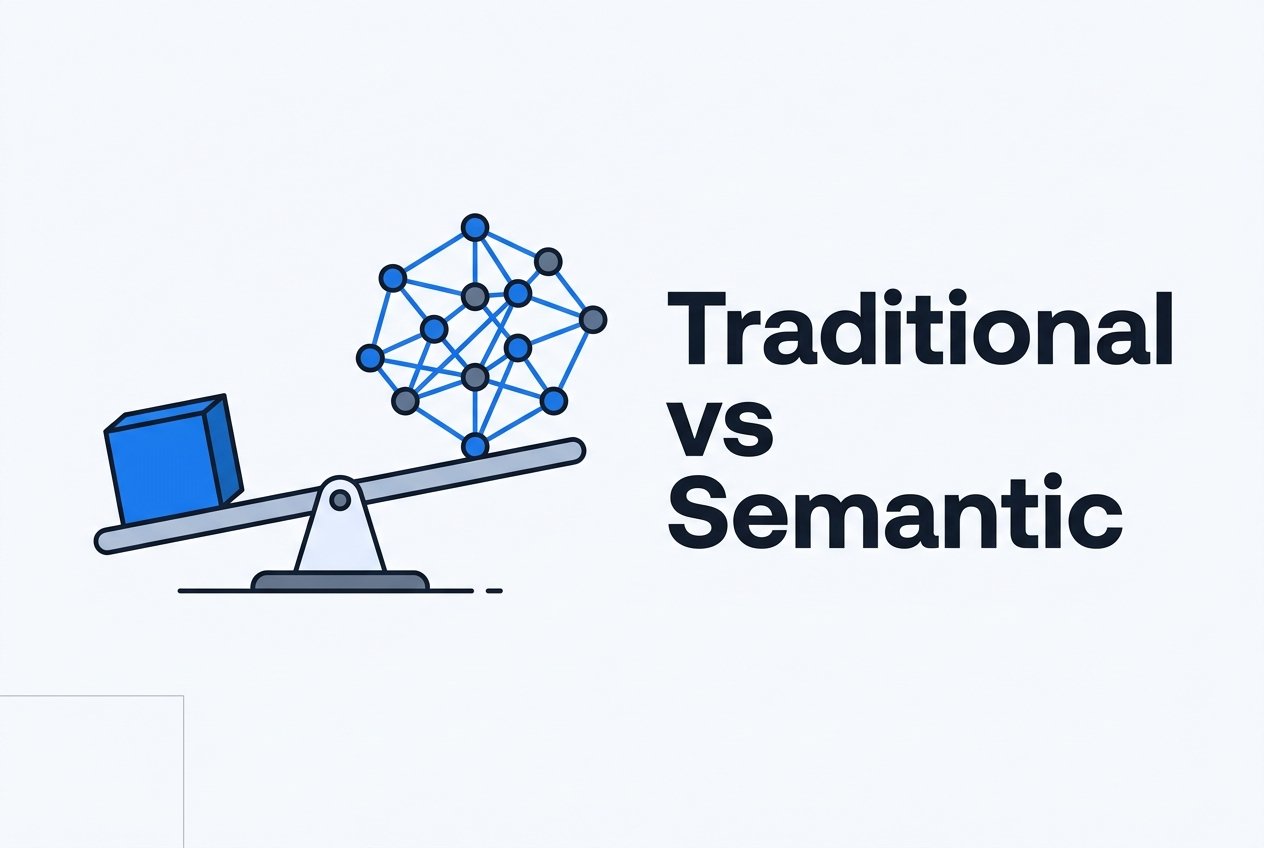
Semantic SEO focuses on entity density and meaning matching, whereas traditional SEO relies on keyword density and string matching. Semantic strategies target broad topic clusters. Traditional tactics optimize single pages for isolated exact-match search terms.
Traditional SEO algorithms counted the frequency of specific words on a web page. Webmasters stuffed exact-match keywords into the title, headers, and body text. Semantic SEO addresses the user query by providing comprehensive factual data. The search engine evaluates the relationships between the facts rather than the frequency of the words. This algorithmic shift requires a fundamental change in content production.
Semantic optimization requires structured data implementation. Traditional SEO focused heavily on raw backlink accumulation without verifying relevance.
| Dimension | Semantic SEO | Traditional SEO |
|---|---|---|
| Core Focus | Entity relationships | Exact-match keywords |
| Content Output | Topic clusters | Single isolated pages |
| Measurement | Topical authority | Keyword density |
| Algorithm Match | Meaning and context | Lexical string matching |
The three operational differences between semantic and traditional SEO are listed below.
- Query Targeting: Semantic strategies target hundreds of long-tail variations simultaneously.
- Data Structure: Modern optimization relies on Schema.org JSON-LD to declare page elements explicitly.
- Link Building: Semantic internal linking prioritizes topical relevance over sheer link volume.
My semantic SEO service page lists what a done for you plan covers.
How much does a semantic SEO audit cost?
A semantic SEO audit costs between 1,500 and 5,000 dollars for a mid-sized website. Enterprise-level semantic mapping and technical schema audits exceed 10,000 dollars. Agency pricing depends entirely on the domain size and the query network complexity.
Digital marketing agencies price semantic audits based on hourly consulting rates. The US Bureau of Labor Statistics reported a mean hourly wage of 40.52 dollars for market research analysts in 2023. Specialized technical consultants charge significantly higher rates for advanced structured data work. You hire an expert SEO consultant to map the entity gaps across your domain. The consultant analyzes the existing topic clusters and the structured data implementation.
A comprehensive audit requires specialized software tools. The analyst exports the organic query data from Google Search Console. The strategist maps the missing entities against the top-ranking competitors.
| Audit Tier | Cost Range | Included Deliverables |
|---|---|---|
| Small Business | $1,500 – $3,000 | Entity gap analysis, basic schema review |
| Mid-Market | $3,500 – $7,000 | Topic cluster mapping, NLP optimization plan |
| Enterprise | $8,000 – $15,000+ | Full knowledge graph alignment, custom JSON-LD |
What are the biggest semantic SEO mistakes?
The biggest semantic SEO mistakes include publishing thin content, omitting structured data, and ignoring search intent. Orphaned pages fail to transfer topical authority. These structural errors prevent the search engine from mapping the domain entities correctly.
Content writers often focus on word counts instead of factual density. The resulting text contains excessive filler words and zero original information gain. The natural language processor extracts no meaningful entities from the bloated paragraphs. The algorithm ignores the page entirely due to low entity density. The marketing team wastes the production budget on invisible content.
Technical implementation errors destroy the semantic architecture. A developer implements invalid JSON-LD schema code. The Googlebot parser fails to read the corrupted markup.
| Failure Mode | Root Cause | Organic Cost |
|---|---|---|
| Orphaned Pages | Missing internal links | Zero crawler discovery |
| Intent Mismatch | Wrong page format | High bounce rate |
| Invalid Schema | Syntax errors in JSON-LD | Loss of rich snippets |
| Thin Content | Low entity density | Algorithmic suppression |
The three most expensive semantic SEO errors are listed below.
- Cannibalization: Two identical pages compete for the exact same semantic cluster.
- Isolation: A valuable article receives zero internal links from the main pillar page.
- Vagueness: The writer uses ambiguous pronouns instead of repeating the specific entity name.
What are the main benefits of semantic SEO?
The main benefits of semantic SEO include capturing long-tail search queries and securing featured snippets. The strategy increases overall organic visibility across the entire topic cluster. Websites demonstrating deep entity coverage earn higher trust scores from search algorithms.
Semantic optimization future-proofs the domain against constant algorithmic updates. Google constantly refines its natural language processing capabilities. A website structured around clear entities benefits from these continuous system upgrades. You secure professional SEO services to build this resilient technical architecture. The resilient architecture maintains traffic stability during volatile algorithm changes.
Comprehensive content satisfies the user query completely. The user spends more time reading the detailed pillar page. This increased dwell time signals high content quality to the search engine.
The four measurable benefits of semantic SEO are listed below.
- Snippet Ownership: Structured data increases the probability of capturing the zero-click answer box.
- Query Expansion: A single optimized page ranks for thousands of semantically related keyword variations.
- Traffic Quality: Exact intent matching delivers highly qualified visitors to the commercial landing pages.
- Crawl Efficiency: Logical site structures allow the Googlebot to index the domain with minimal server load.
What are the primary challenges of semantic SEO?
The primary challenges of semantic SEO include high content creation costs and complex technical implementation. Mapping an exhaustive topic cluster requires extensive research hours. Developers must write and validate precise JSON-LD schema code to declare page entities.
Producing semantically dense content requires subject matter expertise. A generic copywriter cannot generate the specific entities and domain vocabulary required to satisfy the algorithm. The marketing team must hire expensive industry experts to draft the pillar pages. The financial investment required to build a massive topic cluster presents a barrier for smaller organizations.
Maintaining the semantic architecture requires constant technical auditing. The marketing team must update the internal links every time a new article goes live. The search landscape shifts as competitors publish new entity-rich content.
The three operational challenges of semantic SEO are listed below.
- Resource Intensity: Writing a 4,000-word authoritative pillar page demands significant research and editorial time.
- Technical Debt: Broken internal links degrade the topical authority signal across the entire cluster.
- Measurement Difficulty: Tracking rankings for thousands of long-tail semantic variants overwhelms standard reporting tools.
How will generative AI impact semantic SEO in the next 12 months?
Generative AI will impact semantic SEO by increasing the frequency of AI Overviews in search results. Large language models retrieve facts directly from semantically structured web pages. Websites failing to declare their entities clearly will lose organic visibility entirely.
AboveA’s 2026 search industry report noted that AI Overviews appear for 47 percent of searches. This massive shift forces digital marketers to optimize directly for machine retrieval systems. The generative AI model requires explicit subject-predicate-object sentence structures. The language model extracts these clear facts to generate the summary response. A paragraph buried in complex clauses fails this extraction process.
AI search engines rely heavily on established topical authority. The language model prioritizes facts from domains with a verified history in the Knowledge Graph. The semantic SEO strategy feeds this exact requirement. Domains mapping their entities with valid Schema.org markup provide the structured data the AI models consume.
How do digital marketing teams execute semantic SEO strategies?
Digital marketing teams execute semantic SEO strategies by mapping topic clusters and injecting structured data. The content strategists audit the existing pages for missing entities. The technical team applies JSON-LD markup to explicitly define the site’s architecture.
Execution requires strict coordination between writers and developers. The SEO analyst uses natural language processing software to identify the entity gaps in the current content. The writer updates the paragraphs to include the missing nouns and verbs. The developer validates the schema code using Google’s Rich Results Test tool. The team continuously monitors the server logs to confirm Googlebot crawls the new internal links.
Does semantic SEO require schema markup?
Yes, semantic SEO requires schema markup. Schema.org vocabulary provides the standardized code that search engines use to understand page content. Developers deploy JSON-LD scripts to explicitly declare organizations, authors, and products. This structured data disambiguates the entities for the Knowledge Graph. Without markup, the search engine must guess the context.
Is keyword research still relevant for semantic SEO?
Yes, keyword research remains highly relevant for semantic SEO. Marketers perform keyword research to map the entire query network of a central topic. The strategist groups hundreds of related keywords into a single topic cluster. This query fanning process ensures the pillar page answers every variation of the user intent.
Can small websites compete using semantic SEO?
Yes, small websites compete using semantic SEO. A small domain can establish extreme topical authority within a very narrow niche. The search algorithm often ranks a highly specific niche site above a broad domain authority site. You must deploy is SEO worth it, small business SEO tactics to dominate the local entity graph.
Will AI search engines change semantic SEO?
Yes, AI search engines will accelerate the adoption of semantic SEO. AboveA’s 2026 data shows AI Overviews appear for 47 percent of searches. These generative models consume semantically structured data to formulate their answers. Websites utilizing clear entity definitions and topic clusters secure the citations in these AI-generated responses.
What tools analyze semantic SEO entities?
Several software tools analyze semantic SEO entities. The Google Cloud Natural Language API extracts nouns and classifies text directly from the search engine’s perspective. Platforms like Clearscope and SurferSEO compare the entity density of a draft against the top-ranking competitors. Semrush provides the query data required to build the initial topic clusters.
Do semantic SEO strategies increase online presence?
Yes, semantic SEO strategies increase online presence. The strategy expands a website’s footprint across thousands of long-tail search queries. A single entity-rich pillar page captures traffic from hundreds of related semantic searches. You effectively increase online presence by answering the entire spectrum of user intent within your market.
Can an SEO content writer optimize for semantic search?
Yes, an SEO content writer can optimize for semantic search. The writer must transition from keyword insertion to factual density and entity inclusion. You require SEO content writing that utilizes clear subject-predicate-object sentence structures. The natural language processor extracts facts easily from these direct, unambiguous sentences.
Should local businesses invest in semantic SEO?
Yes, local businesses should heavily invest in semantic SEO. Local search relies entirely on regional entity mapping and proximity signals. The business must deploy LocalBusiness schema to declare its exact coordinates and service areas to Google. Applying local SEO for small business connects the company entity directly to the geographic entity.

