
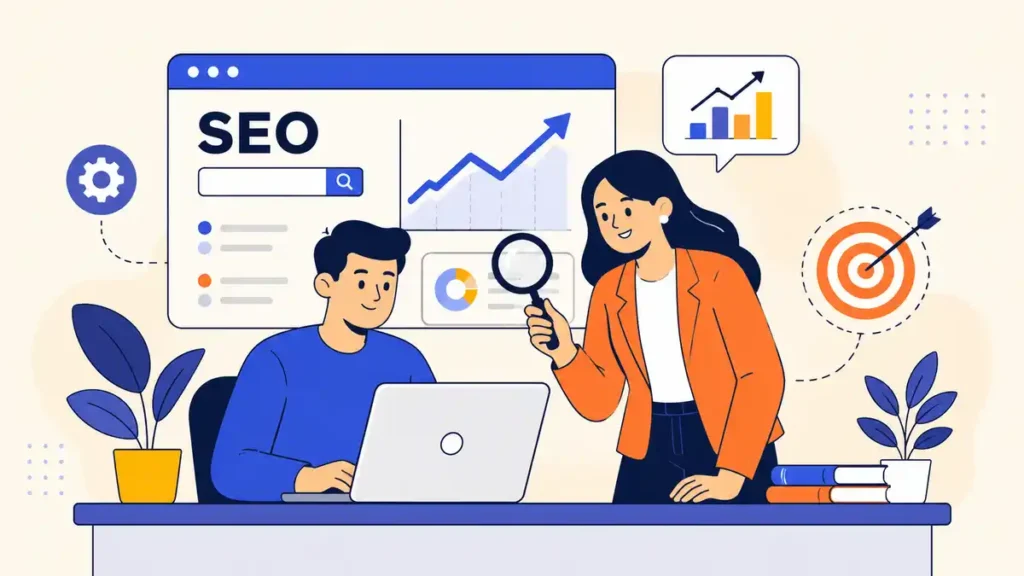
Search engine optimization drives 53 percent of all trackable website traffic in 2026. A modern business dies without organic visibility. Before any transaction happens, customers consult Google. A robust search presence answers their questions, proves brand authority, and captures market share away from competitors who rely entirely on paid advertisements.
The mechanics of optimization dictate how a website performs as a business asset. Search engines process meaning through entity extraction, matching user queries to the most authoritative answers. Founders often ask what is SEO when they notice revenue dropping behind competitors. The answer lies in structured data, topical maps, and clear content architectures. Every optimization aligns a website with how people actually buy products today.
10 reasons why SEO matters are listed below.
1. Increase search visibility
Search engine optimization pushes specific landing pages to the top of Google results. A #1 organic rank captures 27.6 percent of all clicks for that query. Visibility places the company directly in front of buyers at the exact moment they need a solution.
The four pillars of SEO—technical, content, on-page, and off-page—dictate how search engines map a website’s value. Googlebot crawls the sitemap every 24 hours. Pages with clear structure and fast load times score higher in search evaluations.
High visibility removes reliance on social media algorithms. Search intent guarantees that the user actually wants the product. A consistent top-three position signals market dominance to any prospect researching options.
2. Generate qualified organic traffic
Organic traffic brings users who hold high purchase intent. Leads from search engines close at a rate of 14.6 percent, compared to 1.7 percent for outbound leads. Qualified traffic means the sales team wastes zero hours on cold prospects.
Search algorithms filter out irrelevant visitors. A specific long-tail query indicates a buyer near the end of their decision process. Optimization aligns the page content with that specific need.
Traffic quality dictates conversion rates. A high volume of irrelevant clicks only burns server resources. Precision optimization ensures every visitor possesses a genuine commercial interest in the service.
3. Build trust and credibility
A high organic rank acts as a third-party endorsement from Google. Users inherently trust websites that appear naturally at the top of search results. This credibility accelerates the sales cycle for complex business-to-business transactions.
Google’s helpful content signal evaluates originality, depth, and first-hand evidence. A website that meets these strict criteria proves its industry expertise. Consumers avoid ads and click organic links because they trust the algorithm’s filter.
Credibility lowers client acquisition costs. Buyers demand less social proof when they find a company organically. A dominant search presence establishes the brand as the default choice in its specific niche.
4. Increase brand awareness
Consistent appearances across multiple search queries embed a brand into the consumer’s memory. Even zero-click searches build familiarity. High brand awareness ensures the prospect recalls the company name when they finally allocate a budget.
Every content asset you publish helps increase online presence. A topical map blankets the entire industry with brand impressions. Users see the logo and domain name repeatedly as they research different facets of their problem.
Awareness compounds over time. A recognized brand earns higher click-through rates even when it ranks second or third. Familiarity breeds trust, and trust drives revenue.
5. Improve user experience
Technical search requirements force website owners to build better interfaces. Google rewards fast load times, mobile responsiveness, and intuitive navigation. A superior user experience keeps visitors engaged and guides them smoothly toward the checkout page.
Core Web Vitals measure exactly how users experience a webpage. Slow servers and shifting layouts incur search penalties. A fast, stable website prevents bounce rates from destroying conversion metrics.
Optimization removes friction from the buyer journey. Clear headings, accessible menus, and fast images benefit human readers as much as search bots. A site optimized for search is inherently optimized for sales.
6. Understand customer behavior
Search data reveals exactly what consumers want and how they speak. Keyword research uncovers the specific problems your target market tries to solve. This behavioral insight informs product development, sales scripts, and broader business strategies.
Google Search Console tracks every query that triggers a website impression. These metrics show which features buyers prioritize. Content gaps highlight unmet market needs that competitors ignore.
Behavioral data removes guesswork from marketing. Real search volumes prove market demand before a company launches a new service. Optimization data transforms a website into a real-time market research tool.
7. Reach customers throughout the buyer journey
Strategic content targets users at the awareness, consideration, and decision stages. Informational guides capture early research traffic. Commercial landing pages convert visitors who are ready to buy.
A complete optimization strategy maps a specific page to every step of the funnel. Early-stage articles build the retargeting audience. Late-stage product comparisons capture the final purchase decision.
Comprehensive coverage blocks competitors from intercepting prospects. If a buyer consults your website for every question, they rarely check a second vendor. Search visibility monopolizes the customer’s attention from start to finish.
8. Reach the right audience through search intent
Search intent matching ensures the page answers the exact question the user asked. Optimization categorizes queries into informational, navigational, or commercial buckets. Intent alignment prevents a company from showing a sales page to a researcher.
Firms that understand why local SEO is important capture regional buyers with hyper-specific transactional intent. A user searching “plumber near me” needs immediate service, not a guide on pipe maintenance.
Intent matching drives high conversion rates. When a page delivers exactly what the user expects, they stay and buy. Misaligned intent causes instant bounces and lost revenue.
9. Build a sustainable source of website traffic
Organic search traffic acts as an equity asset that grows in value. Unlike paid advertisements that stop the moment the budget runs out, a high-ranking page delivers visitors for years. Sustainability insulates the business from sudden ad price hikes.
Founders constantly debate whether SEO is worth it for small businesses because the initial effort takes months. However, the long-term return on investment eclipses paid channels. A single optimized asset generates leads 24 hours a day without ongoing cost per click.
Sustainable traffic stabilizes revenue. A predictable stream of organic leads allows companies to scale operations safely. Optimization builds a permanent digital storefront.
10. Gain a competitive advantage in search
A dominant search presence captures market share from slower competitors. Optimization acts as a barrier to entry against new market participants. The company that owns the top rankings dictates the industry narrative.
First-page rankings monopolize industry traffic. Competitors relegated to page two receive less than 1 percent of search clicks. Aggressive optimization starves rivals of oxygen and leads.
Competitive advantage compounds over time. High rankings attract backlinks, and backlinks solidify those high rankings. The market leader builds a moat that latecomers cannot easily cross.
A guide on search engine basics covers crawl, index, and rank.
What are the business benefits of SEO?
The primary business benefit of search optimization is a lower client acquisition cost. An expert SEO consultant transforms a static website into an automated lead generation machine. High visibility drives revenue growth without proportionate increases in marketing spend.
Optimization aligns digital assets with actual buyer behavior. The process secures market share, builds industry authority, and delivers a measurable return on investment. Businesses that optimize effectively outlast competitors who rent all their traffic.
How does SEO help generate leads?
Search optimization places targeted offers in front of users with high purchase intent. The strategy captures active demand. Prospects find the website precisely when they need the service, increasing the likelihood they complete a contact form, which is an important metric when determining how long content marketing takes to generate leads.
How does SEO help convert website visitors?
Technical optimization delivers a fast, frictionless user experience. Clear site architecture guides users to the conversion point. Intent-matched content answers specific objections, removing hesitation and compelling the visitor to take immediate action when researching how to grow your business online.
How does SEO support long-term business growth?
Organic rankings provide a compounding asset that delivers traffic without ongoing click costs. This sustainable lead flow insulates the business from ad market volatility. The resulting baseline revenue funds expansion into new markets and services.

